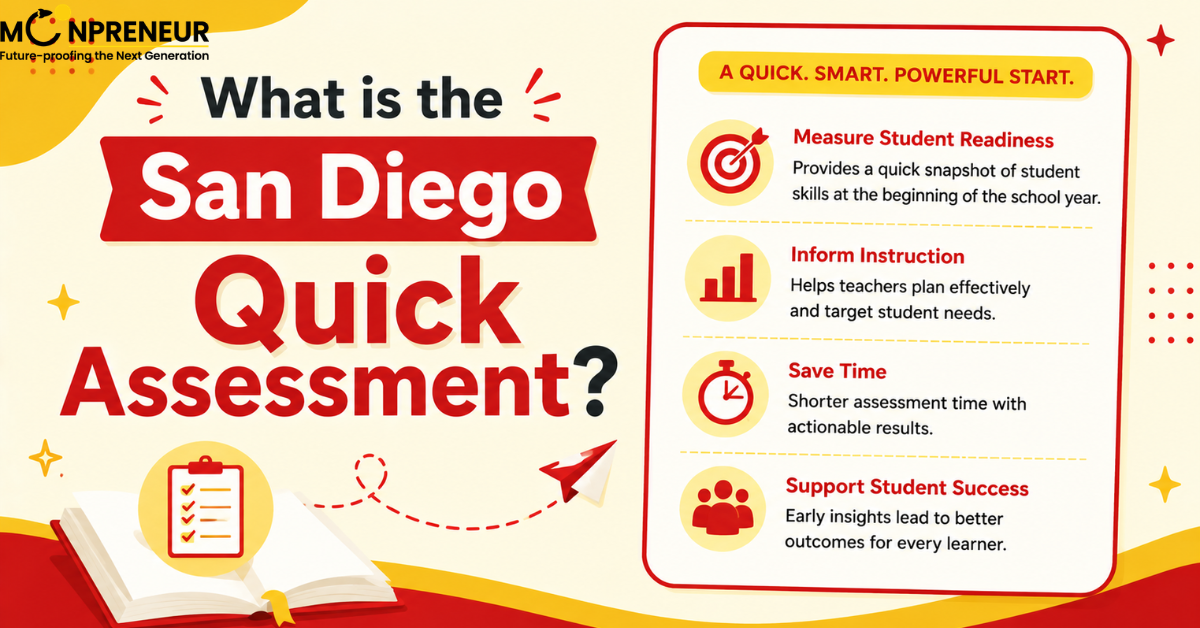
Q1: Is the San Diego Quick Assessment the same as the San Diego Quick Assessment of Reading Ability?
Yes. “San Diego Quick Assessment” and “San Diego Quick Assessment of Reading Ability” (SDQARA or SDQA) refer to the same tool. The formal name includes “of reading ability,” but it is commonly shortened in practice.
Q2: How often should the SDQA be administered?
Most educators administer the SDQA at the beginning of the school year to establish a baseline, and again mid-year or at the end of the year to monitor progress. Tutors may administer it more frequently to track growth over shorter intervals.
Q3: Can parents administer the San Diego Quick Assessment at home?
Absolutely. The SDQA is simple enough for parents to administer at home. The word lists are freely available online. The main requirement is a quiet, one-on-one setting where the child can focus without distractions.
Q4: Can the SDQA diagnose dyslexia?
No. The SDQA is a screening tool, not a diagnostic instrument. It can flag potential reading difficulties that warrant further investigation, but a formal dyslexia diagnosis requires a comprehensive evaluation conducted by a qualified professional (such as a psychologist or speech-language pathologist).
Q5: What if a student scores above Grade 11 on the SDQA?
The SDQA tops out at Grade 11. If a student reads all 11th-grade words correctly, they are reading at or above an 11th-grade word recognition level. Further assessment with more advanced materials may be warranted to fully characterize their abilities.
Q6: Is the SDQA available in languages other than English?
The original SDQA was developed specifically for English language reading. Adapted versions and translations exist in some contexts, but educators should seek validated, language-specific tools when assessing reading in languages other than English.
PakarPBN
A Private Blog Network (PBN) is a collection of websites that are controlled by a single individual or organization and used primarily to build backlinks to a “money site” in order to influence its ranking in search engines such as Google. The core idea behind a PBN is based on the importance of backlinks in Google’s ranking algorithm. Since Google views backlinks as signals of authority and trust, some website owners attempt to artificially create these signals through a controlled network of sites.
In a typical PBN setup, the owner acquires expired or aged domains that already have existing authority, backlinks, and history. These domains are rebuilt with new content and hosted separately, often using different IP addresses, hosting providers, themes, and ownership details to make them appear unrelated. Within the content published on these sites, links are strategically placed that point to the main website the owner wants to rank higher. By doing this, the owner attempts to pass link equity (also known as “link juice”) from the PBN sites to the target website.
The purpose of a PBN is to give the impression that the target website is naturally earning links from multiple independent sources. If done effectively, this can temporarily improve keyword rankings, increase organic visibility, and drive more traffic from search results.