The beginning of a new school year is the perfect time to set your classroom up for success. Whether you’re teaching computer science for the first time or returning with new ideas, Tynker gives you everything you need to get students coding quickly with engaging, self-paced lessons.
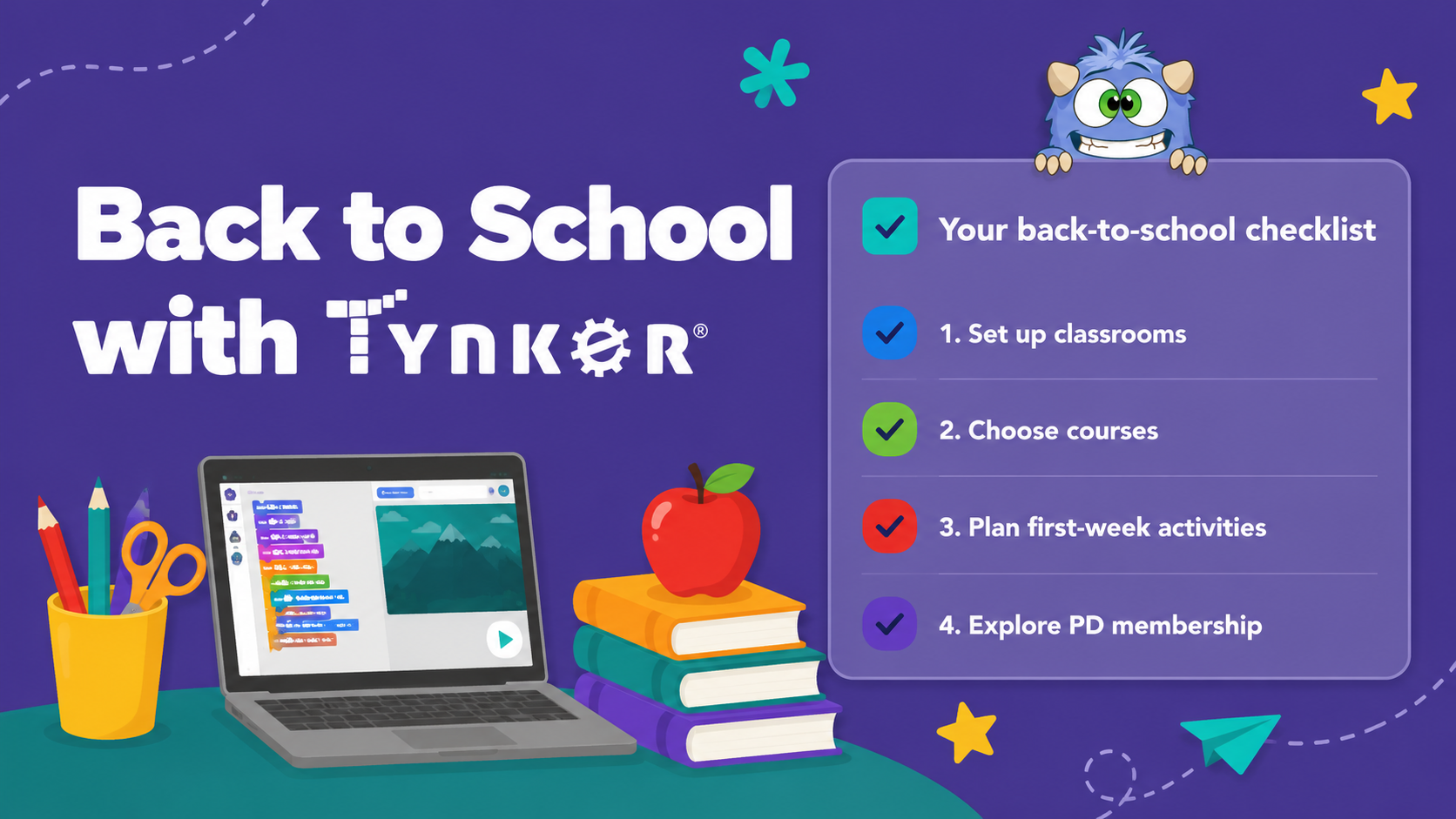
To help you get started, we’ve created a simple four-step checklist that will have your classroom ready for a smooth first week.
1. Set Up Your Classrooms
Getting students into Tynker is quick and flexible, with multiple ways to create classes and roster students.
Students join in seconds at tynker.com/classcode using their Google, Clever, or ClassLink logins. Prefer to set it up yourself? Bulk-import a roster with a CSV, or let Tynker generate usernames and passwords with a custom prefix.
2. Choose Your Courses


Where students can learn
Tynker is available on the web, the Tynker app, and the Tynker Junior app, so students may access content differently depending on their devices. Filter the catalog by grade, subject, and device to see what’s available for your students.
Explore the curriculum maps
Not sure where to start? Our curriculum maps provide grade-level recommendations to help you choose a starting point for your classroom.

These recommendations are designed to help you build a year-long learning pathway while giving you the flexibility to adjust based on your students’ experience.
3. Plan Your First-Week Activities
The first week of school is all about building excitement.
In addition to your core coding lessons, Tynker includes ready-to-use projects that help students jump right into creating.
Popular activities include:

Weather Control Project

NASA’s Return to the Moon

Barbie™ You Can Be Anything™ course
These engaging activities are perfect for introducing coding or reviewing the Tynker environment while giving students an opportunity to create something they’re proud of during the very first week.
4. Explore PD Membership
Want even more support throughout the school year?
Tynker’s Professional Development Membership helps educators build confidence teaching computer science at their own pace.
With the Tynker PD Membership, you’ll have on-demand access to a growing library of instructional videos that make it easy to strengthen your skills, discover new classroom strategies, and get even more from Tynker throughout the school year.
Free vs. Premium
Tynker is available with both Free and Premium teacher accounts. The premium plan adds the full curriculum, lesson plans, and the teacher tools that give you time back in your day.

If you’re ready to bring a complete K-8 computer science curriculum to your school, request a quote to learn more about Premium.
You’re Never on Your Own
Whether you’re just getting started or have been teaching with Tynker for years, help is always available. Find quick answers in the Help Center, or email the Tynker for Schools team at schools@tynker.com.
Set Up Your Classes Before the Bell Rings
Everything you need for a successful first week is waiting inside Tynker.
Whether you’re creating your first classroom, choosing the right curriculum, planning engaging activities, or exploring professional development, Tynker is here to help you start the school year with confidence.
Ready to begin? Start your free teacher account or request a quote to bring Tynker Premium to your school.
From a Tynker Teacher
“We want kids to get excited about coding, and Tynker has worked great for our student base. Almost every lesson ends with students creating something they’re proud of.”
— Myles Keough at The Biome STEAM School
PakarPBN
A Private Blog Network (PBN) is a collection of websites that are controlled by a single individual or organization and used primarily to build backlinks to a “money site” in order to influence its ranking in search engines such as Google. The core idea behind a PBN is based on the importance of backlinks in Google’s ranking algorithm. Since Google views backlinks as signals of authority and trust, some website owners attempt to artificially create these signals through a controlled network of sites.
In a typical PBN setup, the owner acquires expired or aged domains that already have existing authority, backlinks, and history. These domains are rebuilt with new content and hosted separately, often using different IP addresses, hosting providers, themes, and ownership details to make them appear unrelated. Within the content published on these sites, links are strategically placed that point to the main website the owner wants to rank higher. By doing this, the owner attempts to pass link equity (also known as “link juice”) from the PBN sites to the target website.
The purpose of a PBN is to give the impression that the target website is naturally earning links from multiple independent sources. If done effectively, this can temporarily improve keyword rankings, increase organic visibility, and drive more traffic from search results.